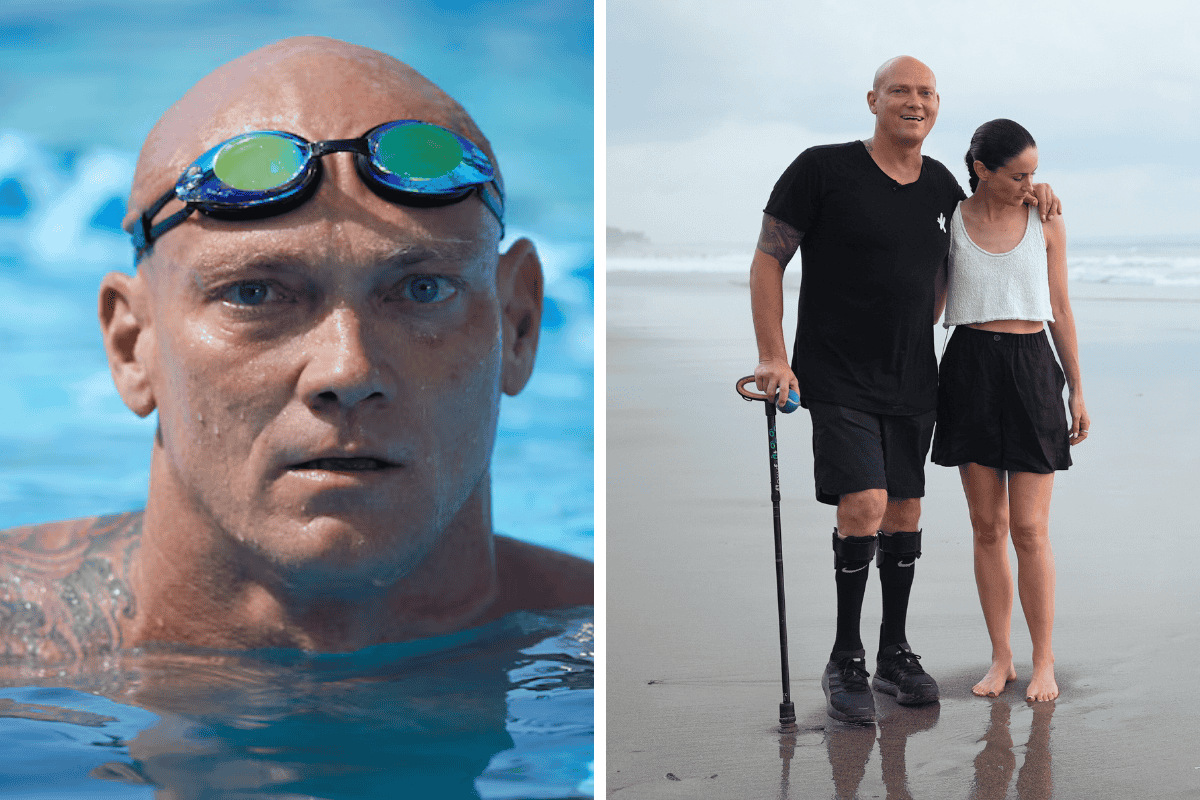
He was once known as one of Australia’s strongest swimmers, a man who could slice through water like a machine. But life changed suddenly for Michael Klim when his powerful legs gave way at an airport in Kuala Lumpur.
Sitting on the floor, unable to stand, he realised something was seriously wrong. That frightening moment marked the beginning of a journey filled with pain, confusion, love, and eventually, hope.
From Olympic Champion to Health Struggle

Before his illness, Michael Klim was one of Australia’s most recognised swimmers. At the 2000 Sydney Olympics, he became a national hero. He helped Australia win gold in the 4x100m freestyle relay, setting a world record in the first leg. Along with teammates like Ian Thorpe, he celebrated in style after defeating the strong US team.
Over his career, Klim competed in three Olympics, winning two gold medals, three silver medals, and one bronze. He also set 21 world records. For many Australians, he was the face of swimming success.
But years later, his biggest challenge was not in the pool. It was inside his own body.
The Shocking Diagnosis: CIDP
After collapsing at the airport in 2019, Klim spent months searching for answers. His muscles were getting weaker. His legs were shrinking. No matter how much he tried to exercise, nothing improved.
Six months later, doctors diagnosed him with chronic inflammatory demyelinating polyneuropathy (CIDP). This is a rare autoimmune disorder where the body attacks its own nerves. It causes weakness, numbness, and muscle loss, mainly in the arms and legs.
In Australia, around 3,000 people live with CIDP. There is no cure. Some people recover slowly, while others may need a wheelchair. Treatment options are limited, and the future is often uncertain.

For someone who built his identity on physical strength, this news was heartbreaking. Klim felt lost. He believed his value as a person was tied to his athletic ability. Watching his muscles waste away was mentally and emotionally painful.
Love During the Darkest Days
During this difficult time, one person stood firmly by his side — Michelle Owen.
They had met just months before his collapse, backstage at a music event in Bali. At that time, Klim had already started noticing problems with his legs. He told Michelle something wasn’t right, though he didn’t know what it was.
When his condition worsened, Michelle saw the reality of his illness. She heard him fall at home. She saw how upset his children were. She watched him struggle physically and mentally.
The COVID-19 lockdown unexpectedly brought them closer. What started as a short visit turned into living together in Bali. Through anger, denial, depression, and frustration, Michelle stayed.
Klim admits he wasn’t always easy to live with. He stopped exercising, ate poorly, drank more, and avoided social situations. But with support from Michelle and his family, he slowly began to change.
In late 2023, the couple got engaged. Klim calls meeting Michelle the brightest moment during his darkest period.
Fighting Back with Treatment and Purpose
Finding the right treatment took time. Eventually, intravenous immunoglobulin (IVIg) therapy helped stabilise his condition. This treatment uses donated plasma to support the immune system.
Klim now travels regularly to Australia for infusions. Each session requires plasma from 32 donors. That is why he works closely with Australian Red Cross Lifeblood to encourage people to donate.
He also started the Klim Foundation to spread awareness about CIDP. The foundation supports patients and caregivers while pushing for faster diagnosis and better treatments.
Today, his arms remain strong, and the muscle loss in his legs has stopped. He uses ankle-foot orthoses (AFOs) — special braces that help him walk. While he may not move like he once did, he refuses to give up.
Redefining Success and Strength
For years, Klim believed success meant gold medals and world records. He was once disappointed that he never won an individual Olympic gold medal.
But illness changed his thinking.
Now, he believes success is not about medals or money. It is about resilience, family, purpose, and helping others. He still loves swimming. In fact, he jokes that he can swim better than he can walk. In water, he feels free.
Water, he says, is a powerful symbol. It changes shape, but it remains strong. Just like him.
Michael Klim’s journey shows that true strength is not just physical. It is mental, emotional, and built through struggle. His illness may have taken away his powerful legs, but it gave him something deeper — humility, empathy, and a new purpose in life.
In the end, his story is not about losing ability. It is about finding meaning. Even when life knocks you down, you can rise again in a different way. Strength is not only about how fast you swim or how much you lift. Sometimes, it is about how bravely you face the unknown and keep moving forward, one step at a time.
FAQ
1. What illness does Michael Klim have?
Michael Klim has chronic inflammatory demyelinating polyneuropathy (CIDP), a rare autoimmune disorder that affects the nerves and causes muscle weakness.
2. Is CIDP curable?
No, there is currently no cure for CIDP. However, treatments like IVIg therapy can help manage symptoms and slow down the progression.
3. How many Olympic medals did Michael Klim win?
Michael Klim won six Olympic medals — two gold, three silver, and one bronze.
4. What is the Klim Foundation?
The Klim Foundation is an organisation started by Michael Klim to raise awareness about CIDP and support patients and caregivers.
5. How is Michael Klim doing now?
His condition has stabilised with treatment. He uses leg braces to walk and continues to work on awareness campaigns while enjoying time with his family.