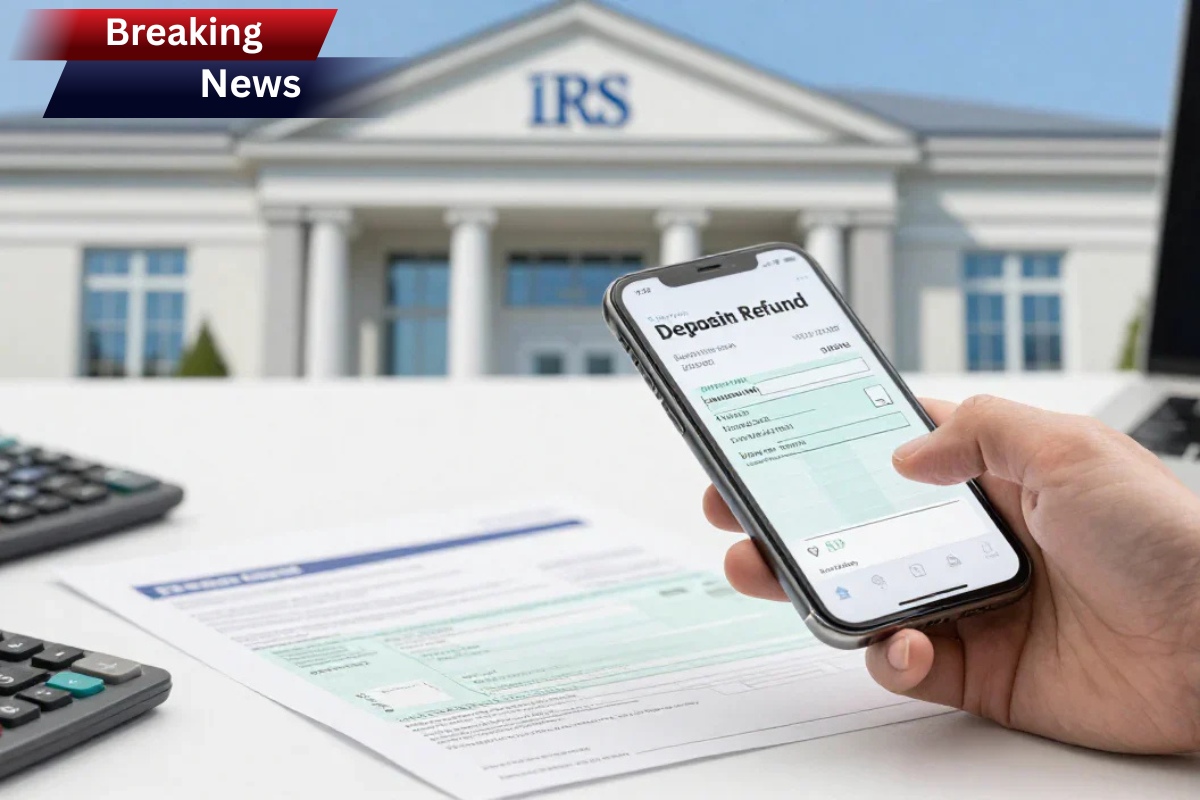
Your refund might be closer than you think—or still a few processing cycles away. Once the IRS accepts your electronically filed federal income tax return, the clock officially starts ticking. And in 2026, that clock looks a little different because the agency has shifted fully to direct deposit for refund disbursements, eliminating paper checks entirely.
That means no mailbox watching this year. If you’re getting money back, it’s heading straight to your bank account.

According to IRS processing guidance and reporting from WAFB, most electronically filed returns with direct deposit can result in refunds arriving as quickly as 10 business days after acceptance. But—and this is key—the timeline depends entirely on the date your return was officially accepted, not the day you hit “submit.”
When to Expect Your 2026 Refund
The IRS began accepting electronically filed 2025 tax year returns on January 26, 2026. From that point forward, refund timing follows a rolling schedule.
Here’s a projected timeline based on acceptance dates:
| IRS Acceptance Date | Expected Refund Date |
|---|---|
| Jan. 26, 2026* | Feb. 6, 2026 |
| Feb. 2 | Feb. 13* |
| Feb. 9 | Feb. 20** |
| Feb. 16 | Feb. 27** |
| Feb. 23 | Mar. 6 |
| Mar. 2 | Mar. 13 |
| Mar. 9 | Mar. 20 |
| Mar. 16 | Mar. 27 |
| Mar. 23*** | Apr. 3*** |
| Mar. 30*** | Apr. 10*** |
| Apr. 6*** | Apr. 17*** |
| Apr. 13*** | Apr. 24*** |

Important clarifications:
- January 26 marks the official opening of the 2026 filing season for 2025 returns.
- Refunds involving the Earned Income Tax Credit (EITC) or Additional Child Tax Credit (ACTC) may be delayed until March due to mandatory review requirements under the PATH Act. The IRS outlines these protections at https://www.irs.gov/credits-deductions/individuals/earned-income-tax-credit.
- Later acceptance dates reflect returns filed closer to the April tax deadline, which may experience heavier processing volumes.
These estimates assume error-free, electronically filed returns with accurate direct deposit details.
No More Paper Checks
This year, the IRS is strictly using direct deposit for tax refunds. Paper checks for routine refund issuance have been discontinued as part of the agency’s broader modernization push.

The IRS has long encouraged direct deposit because it’s faster and reduces fraud risk. According to IRS guidance at https://www.irs.gov/refunds, direct deposit is the safest and quickest way to receive funds.
But here’s the catch: if your banking information is incorrect—or missing—processing can stall. There’s no longer a default paper check fallback.
That makes reviewing your routing and account numbers more important than ever.
What If the Refund Doesn’t Arrive?
If your return shows as processed but your refund hasn’t landed by the expected date, the IRS recommends using its “Where’s My Refund?” tool at https://www.irs.gov/wheres-my-refund
To check your status, you’ll need:
- Your Social Security number
- Your filing status (Single, Married Filing Jointly, etc.)
- The exact dollar amount of your expected refund
The tool updates once daily, typically overnight. Calling the IRS before the standard 21-day window has passed usually won’t speed things up.
Why Some Refunds Take Longer
Not every return moves through the system at the same speed.
Here are common delay triggers:
- EITC or ACTC claims:- By law, the IRS cannot issue refunds involving these credits before mid-February, even if the return is filed early. This requirement was implemented to reduce fraud.
- Errors or mismatches:- A typo in a Social Security number. A math error. Missing forms. Even something small can push your return into manual review.
- Identity verification flags:- If the IRS suspects identity theft or fraud, it may require additional verification before releasing funds.
- High-volume filing periods:- Returns submitted closer to the April deadline may face slower processing due to system congestion.
Strategies for Faster Processing
Want to avoid refund limbo? Here’s what seasoned tax pros recommend.
- File electronically:- E-filing bypasses manual paper handling and significantly reduces processing time.
- Double-check direct deposit information:- One wrong digit in your routing number can derail everything. Confirm details before submitting.
- File early:- Returns filed at the start of the season often clear faster before peak traffic hits.
- Review your return carefully:- Simple mistakes can trigger manual reviews that delay refunds for weeks.
- Monitor your IRS account:- Setting up an online IRS account at https://www.irs.gov/payments/your-online-account allows you to see notices, balances, and refund status updates.
The Bigger Picture
For many Americans, tax refunds are more than just extra cash. The average federal refund in recent filing seasons has hovered around $3,000. That’s rent, credit card relief, car repairs, or a long-overdue savings boost.
The IRS has made clear that electronic processing is the future. Faster deposits, fewer paper vulnerabilities, streamlined systems. But that also means less room for error.
If you’ve already filed and your return was accepted, the countdown is on. Most refunds move quickly—often within 10 business days. If yours hasn’t, don’t panic immediately. Check the status tool. Verify your details. Give the system its standard window.
In tax season, patience helps. But preparation helps more.
FAQs
Q. How long does it take to receive a refund after IRS acceptance?
Most direct deposit refunds arrive within 10 business days, though the IRS advises allowing up to 21 days.
Q. Does the IRS still issue paper refund checks in 2026?
Refunds are now being issued via direct deposit only, with paper checks discontinued for routine refunds.
Q. Why is my refund delayed if I claimed EITC or ACTC?
Federal law requires the IRS to hold these refunds until mid-February to verify eligibility and reduce fraud.
Q. How can I check my refund status?
Use the “Where’s My Refund?” tool on IRS.gov with your Social Security number, filing status, and exact refund amount.
Q. What should I do if my refund hasn’t arrived after 21 days?
Check your IRS online account and the refund tracking tool. If no updates appear, you may need to contact the IRS directly